
‘See something, say something’
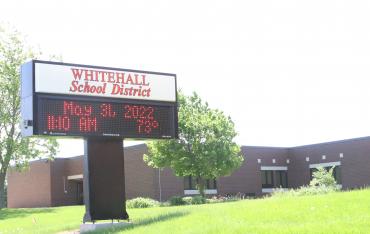
When two area superintendents were getting the ‘pings’ from their phone notifications and watching the headlines sprawl across their televisions and computers that another school shooting was happening across the country last week, their first reaction wasn’t dissimilar to most others.
School District of Arcadia Superintendent Lance Bagstad found himself disappointed and sad that innocent children were again the victims of violence and never made it home from a day of school that was supposed to be filled with their favorite teacher and time with friends.
Whitehall School District Superintendent Mike Beighley found himself frustrated because he fears the same cycle will repeat itself — people share social media posts and demand change while politicians take over TV news, and then a week or two goes by and life goes back to normal.
“When you think of those specific little kids and their teachers that were killed, that’s the hard part. But the concern for me is we’ll talk about this for two weeks, and then folks go back to doing exactly what they were doing on Monday without looking at any real depth to what causes these scenarios,” Beighley said.
The shooting at Robb Elementary in Uvalde, Texas last Tuesday left at least 19 children and two teachers dead when an armed 18-year-old barricaded himself in a classroom.
Both local superintendents said while it’s hard to compare directly to a school in Texas, they empathize with the community, staff and families. Both Bagstad and Beighley said they hope that it reminds people that these acts of violence do continue to happen and shouldn’t be taken lightly.
What now?
Next steps are a complicated equation, both said.
Gale-Ettrick-Trempealeau sent a letter to families after the incident, increased the police presence in and around the school district and encouraged students to seek counseling if they wished. Superintendent Michele Butler could not be reached for comment for this story.
Arcadia opted not to send any formal communication to families after a deep dive into the situation and how it relates to their district, Bagstad said.
Both Beighley and Bagstad said that their district reviews safety protocols constantly, adding that they communicate with other area education leaders regarding safety on a regular basis as well as when a shooting such as Tuesday’s happens.
Beighley said questions come up out of the blue that help the district review its safety policies and lockdown protocols. These protocols are reviewed more than monthly, he said.
“If there’s not a sad commentary for our society today, that might be it,” Beighley said, “that we have to look at this scenario literally continuously to keep our kids and our staff safe in what should be the safest place in the world.”
There is a balance, too, in making sure that students and staff are aware of the procedures while also not putting them all over the school so that anyone can see them or find them, Bagstad said. Staff have forms in every classroom detailing protocols and what steps they can and should take.
There are some people who want more practice of active shooter drills and emergency situations, but one issue with doing so too often is that then anyone could be watching and taking note of all the details and plans.
“I think there has to be some caretaking in making sure that you don’t share everything that you’re going to do with everybody on the face of the earth because that just creates a system in which everybody knows what you’re already going to do.”
Safety measures can be reviewed, Bagstad said, but people also need to remember that sometimes these issues are deeper than just locked school doors.
“I think people need to realize that we’re going to do everything we can possible, but unfortunately there are bad people that choose to do bad things,” he said. “And unfortunately, I don’t know if we’ll ever be able to prevent all bad people from doing all bad things.”
Training helps but can’t always simulate the true fear and stress of such a situation in real time.
“The training is there to have you be prepared so that you can instantaneously react,” Bagstad said. “But I don’t think there’s anybody that can tell you how they will react if bullets are flying and glass is shattering and everything else.”
‘See something, say something’
Schools truly are safe, Beighley said, adding that it can be frustrating to see politicians take advantage of that for their own gain when these events happen. Staff in Whitehall are trusted to educate and talk with their students about these events however they feel is appropriate and necessary, he said.
In Arcadia High School, the message ‘See something, say something’ flashes on screens throughout the building all day, and Bagstad said the school strives to foster an environment where students can trust staff and be honest if something seems unsafe or they are concerned.
That should be the big takeaway from all of this, he said — people need to support each other and make connections. And they can’t be scared to step up and say something if they are worried.
“I think people have to just report things or anything that’s suspicious,” Bagstad said. “You’d rather have something reported that is maybe nothing than not have something reported that turns into something.”
It’s a constant focus for schools to try to prevent any sort of mental health problems, and staff continuously evaluate safety and figure out which kids might be struggling or may need more intervention. But that should be happening outside schools, too, Beighley believes.
“They’re continually on edge trying to assess which kids might be struggling or which kids might be someone to keep an eye on — not from a perspective of ‘They’re going to be a school shooter’—but that we ought to help them,” he said. “And until we as a society figure out that we’re willing to help one another and work with one another as opposed to passing the buck to somebody else, I don’t know what else is going to change.”
